


 Bahasa Indonesia
  Tiếng Việt
  ភាសាខ្មែរ
 .png) Filipino
Filipino .png) ພາສາລາວ
ພາສາລາວ 
Operating the Rice Straw Baler
Roller Baler Pulled by a Tractor
Tractor power is measured in horsepower (HP) and is selected based on the size and type of straw baler. In this guide, the small baler (STAR MRB 0850B) and a medium-sized baling press (CLAAS Markant 55) will be used as examples.
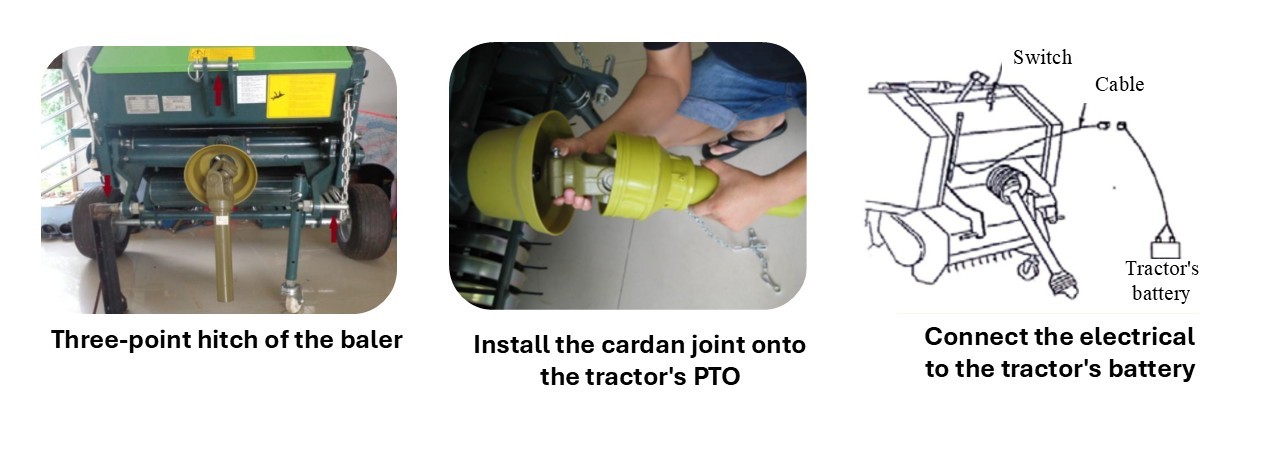
- The baler utilizes a three-point hitch system, connecting to the fixed lower-left link, the adjustable lower-right link, and the top link (upper attachment point).
- Install the cardan joint onto the tractor’s power take-off (PTO) shaft. The cardan joint is located at the front of the baler.
- Connect the electrical to the tractor’s 12V battery. Place the signaling mechanism (horn) in an appropriate position the operator to access.
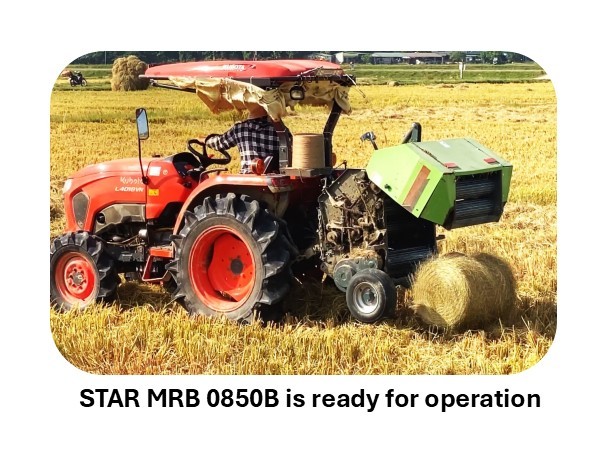
Once the three-point hitch and PTO shaft are secured, the STAR MRB 0850B is ready for operation.
Installing the CLAAS Markant 55 Baler
- Before installing the baler, ensure the pickup tins are clean and lubricate all moving parts. Check chain and roller tension, adjust as necessary, and perform a regular oil/lubricant inspection.
- Use a tractor with sufficient power (minimum 60 HP).
- Install the baler and use an R-locking pin to securely fix the hitch pin to the drawbar and the anti-roll bar.
- Connect the baler’ cardan to the tractor’s PTO shaft and engage the compacting chamber. Ensure all cardan components are cleaned and lubricated before attachment.
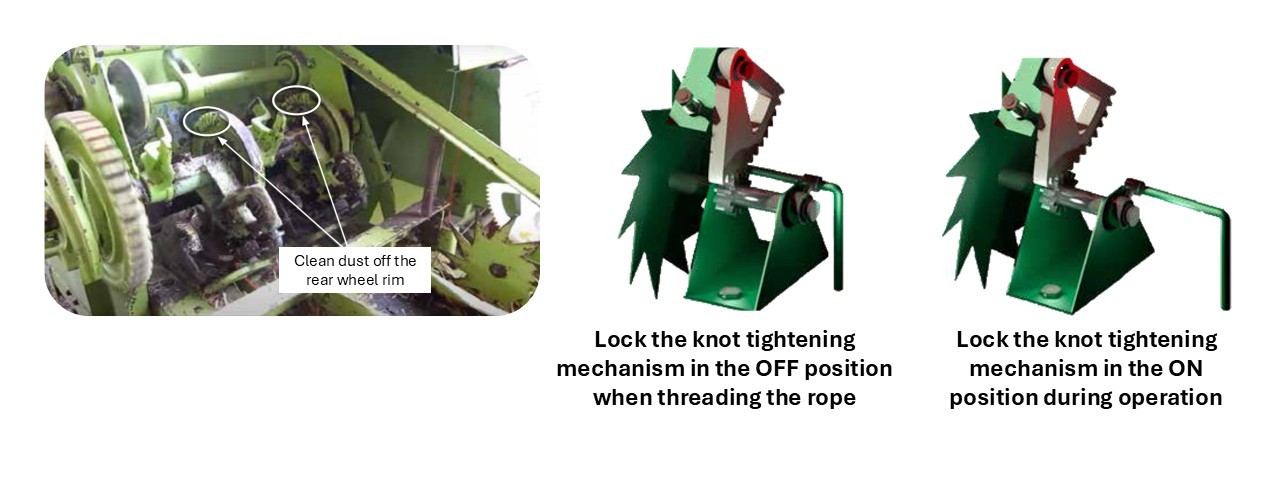
- Before threading twine, push the safety lock of the twine threading system towards the cut-off mechanism.
- Install six twine spools into the compartment; tie the end of the outer spool to the inner end of the next spool to ensure a continuous pulling of twine.
- Adjust the knotter mechanism from transport mode to working mode.
- Position the right-side stopper of the baler so that the operator can simultaneously pull the twine and slowly drive the tractor forward until the locking pin engages into the inner hole of the quarter-angle.
- Adjust the baling height so that the tines are 20-30 mm above the ground
- Adjust the baling density according to the condition of the straw in the field.
Pre-Operation Inspection and Maintenance
Check the machine before use: water, oil, lubricants, air (tires), and other factors
Safely Starting and Stopping the Tractor
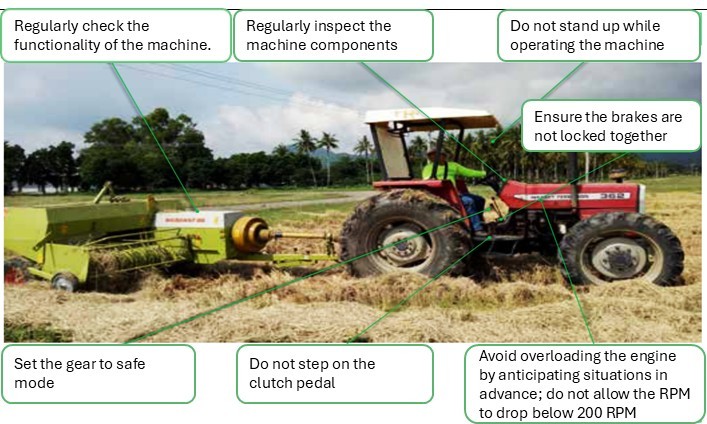
- Before starting the tractor, the operator must be fully trained in operating procedures and emergency stop methods.
- When field work is complete or repairs are needed, safely stop the machine using the following protocol:

- If a standard safe stopping point is unavailable, utilize a pre-planned contingency area.
- Before starting the engine, ensure all surroundings are clear. Verify the braking system, steering, and other control systems. Maintain situational awareness to ensure the tractor does not endanger bystanders during operation.