

 Bahasa Indonesia
 Tiếng Việt
 ភាសាខ្មែរ
.png) Filipino
.png) ພາສາລາວ

Listening to Women and Men: CABIN Advances Gender-Inclusive Precision Agriculture in Can Tho
By understanding who works in the field and who makes decisions, IRRI is designing precision nutrient management solutions that better fit every rice-farming household.
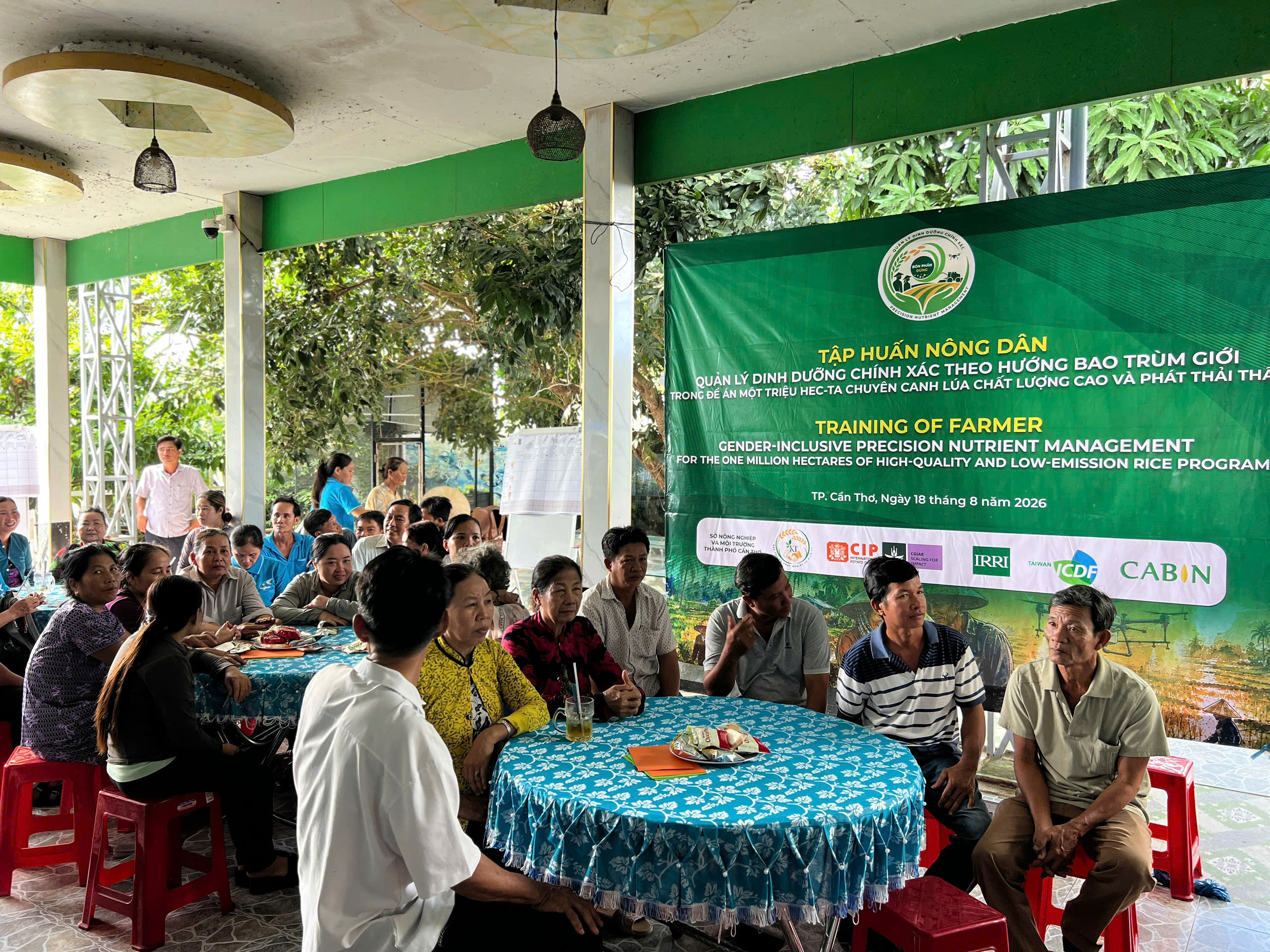
On 18 August, more than 70 participants, including women and men farmers, experts, and agency representatives, gathered at Kien Thanh Cooperative in Vi Thanh 1 Commune, Can Tho City, for a training on gender-inclusive Precision Nutrient Management (PNM). Supported by the CABIN project, the event was organized by the International Rice Research Institute (IRRI), the International Potato Center (CIP), and the Can Tho Department of Agriculture and Environment under Vietnam’s One Million Hectare High-Quality, Low-Emission Rice Program.
Technology that fits real farm life
PNM aims to apply the right fertilizer, at the right time, in the right amount, in the right place, and in the right way. It helps farmers use inputs more efficiently while supporting low-emission rice production. Yet IRRI and CIP recognize that even the best technical solutions are only widely adopted when they meet farmers’ real needs. That is why the training was held directly at the cooperative, with women and men first discussing in separate groups before sharing their views together.
Who does the work, and who decides?
Farmers mapped each stage of production, from sowing, fertilizing, irrigation, and weeding to pest monitoring, harvesting, and straw management, identifying who carries out each task and who makes the decisions. This matters for PNM because fertilizer decisions often involve several household members. Reaching only one “household representative” can leave an incomplete picture of how choices are actually made.
One woman farmer said she was delighted to be personally invited for the first time. Although she works in the field and decides on farm spending together with her husband, past trainings usually invited only the household head, so her husband attended while she had little direct access to information.
IRRI’s field survey supports this observation. Fewer women than men work in the field or make rice-farming decisions on their own, but women’s participation rises noticeably in joint decisions on seed and fertilizer selection. Notably, women manage household finances in around 80% of cases.
Asking what farmers really need
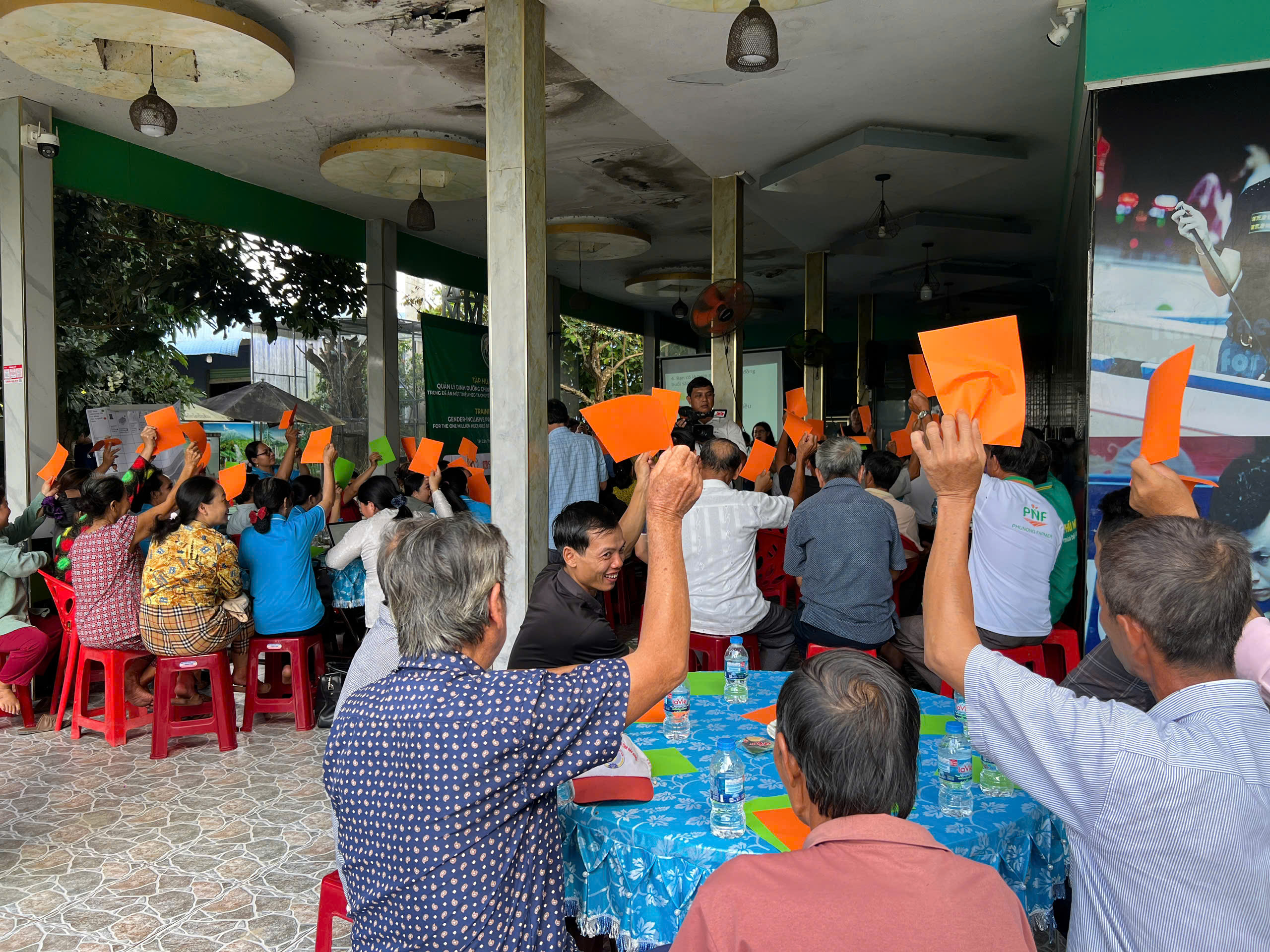
Rather than assuming one training format fits all, the program asked participants directly how they prefer to learn about PNM. Farmers raised concerns about fertilizer prices, labor and time, weather, pests, rice prices, and soil quality, as well as the cost, ease of use, and yield risks of changing their current practices. These conversations shift the focus from “What should we teach farmers?” to “What do farmers truly need, and how can we best support them?”
Inclusion drives adoption
For the Mekong Delta, combining science and technology with gender equality offers a practical path forward. Technology only creates change when it reaches producers and is chosen and adopted by the whole household. By listening to both women and men, the Kien Thanh training helps make precision agriculture more practical, accessible, and ready to scale.
