
 Bahasa Indonesia
  Tiếng Việt
  ភាសាខ្មែរ
 .png) Filipino
Filipino .png) ພາສາລາວ
ພາສາລາວ 
From Mekong to Mekong: Cambodia Learns Vietnam’s Straw Mushroom Know-How as Cross-Border Circular Agriculture Takes Root
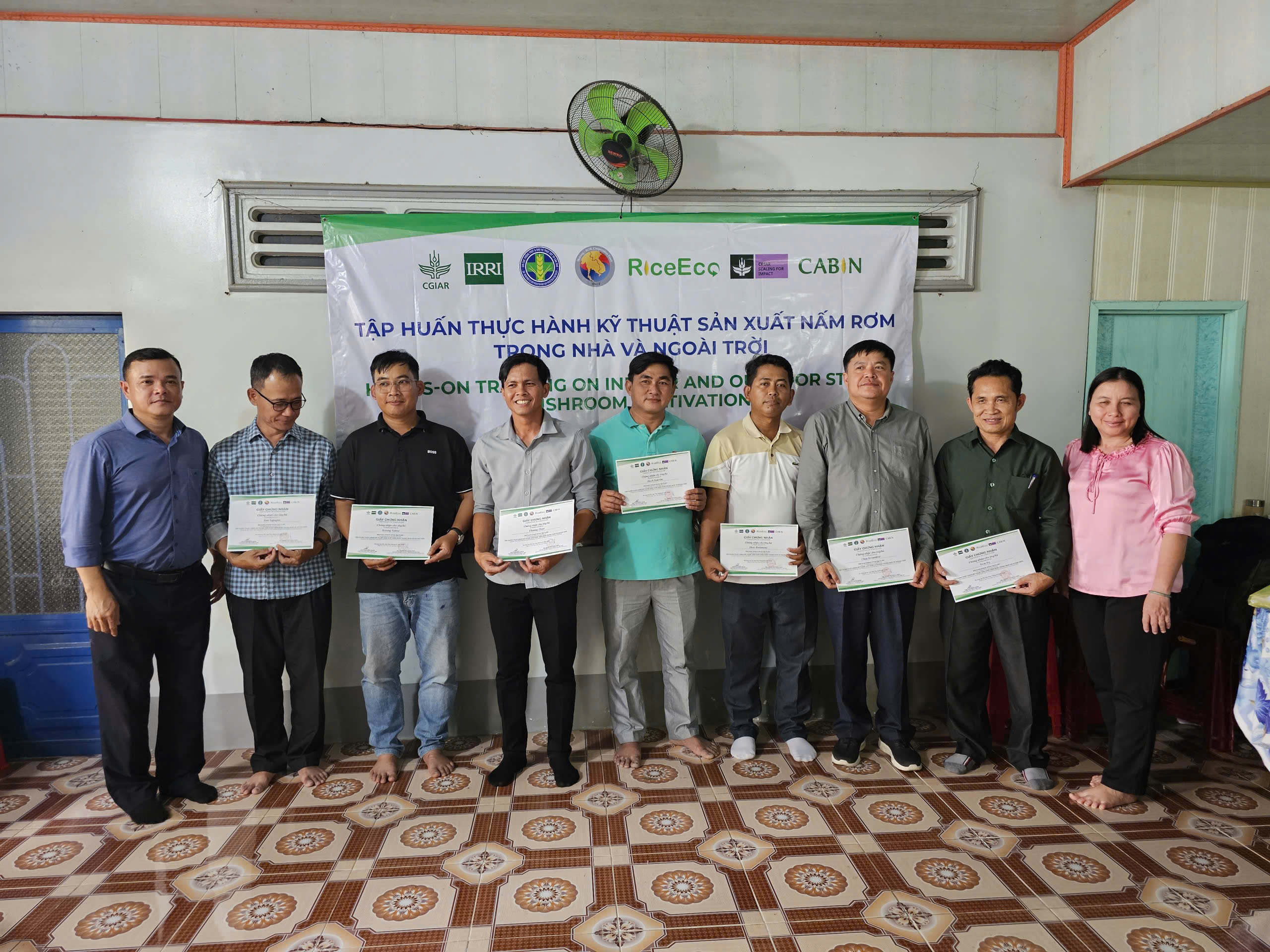
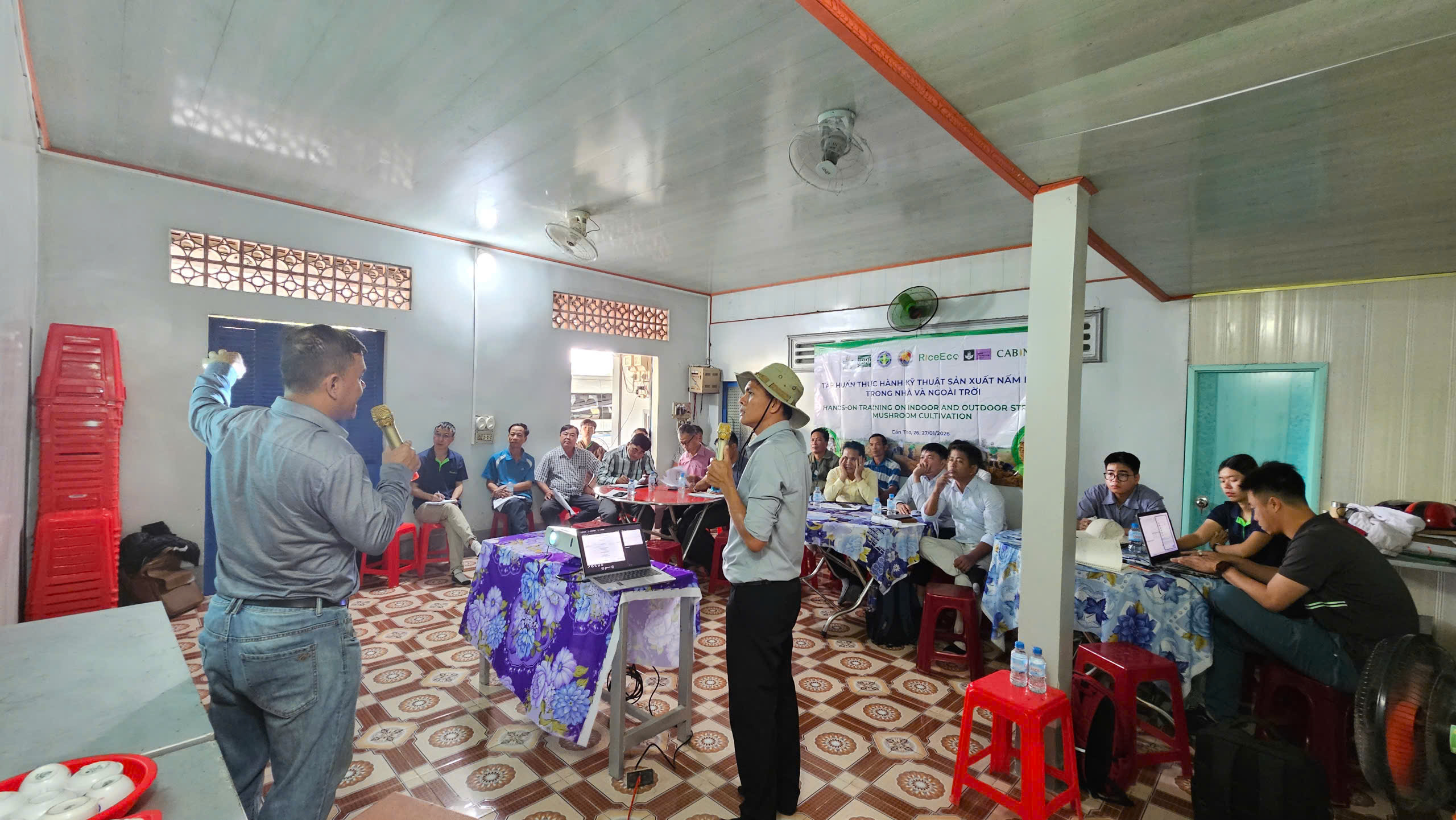
CAN THO, Vietnam, 27 January 2025 – On the outskirts of the Mekong Delta, inside a cooperative that once saw rice straw only as waste to be burned, a quiet but significant cross-border transfer of knowledge has just taken place. Over two days, a delegation of eight Cambodian farmers and government officers joined Vietnamese farmers, researchers, and international experts in a hands-on training on indoor and outdoor straw mushroom cultivation – a low-investment, high-return circular economy model that turns leftover rice straw into a cash crop.
The training with the support of CABIN project, held on 26–27 January at Tien Thuan Cooperative in Can Tho City, brought together 31 participants, including representatives from five local cooperatives, the Can Tho Sub-Department of Crop Production and Plant Protection, scientists from Can Tho University, and specialists from the International Rice Research Institute (IRRI) Vietnam Office. But the international spotlight fell on the eight-member Cambodian delegation – a sign that Vietnam’s experience in straw-based circular agriculture is increasingly seen as a replicable model across the Greater Mekong region.
Learning by Doing: From Harvest to Mushroom Bed
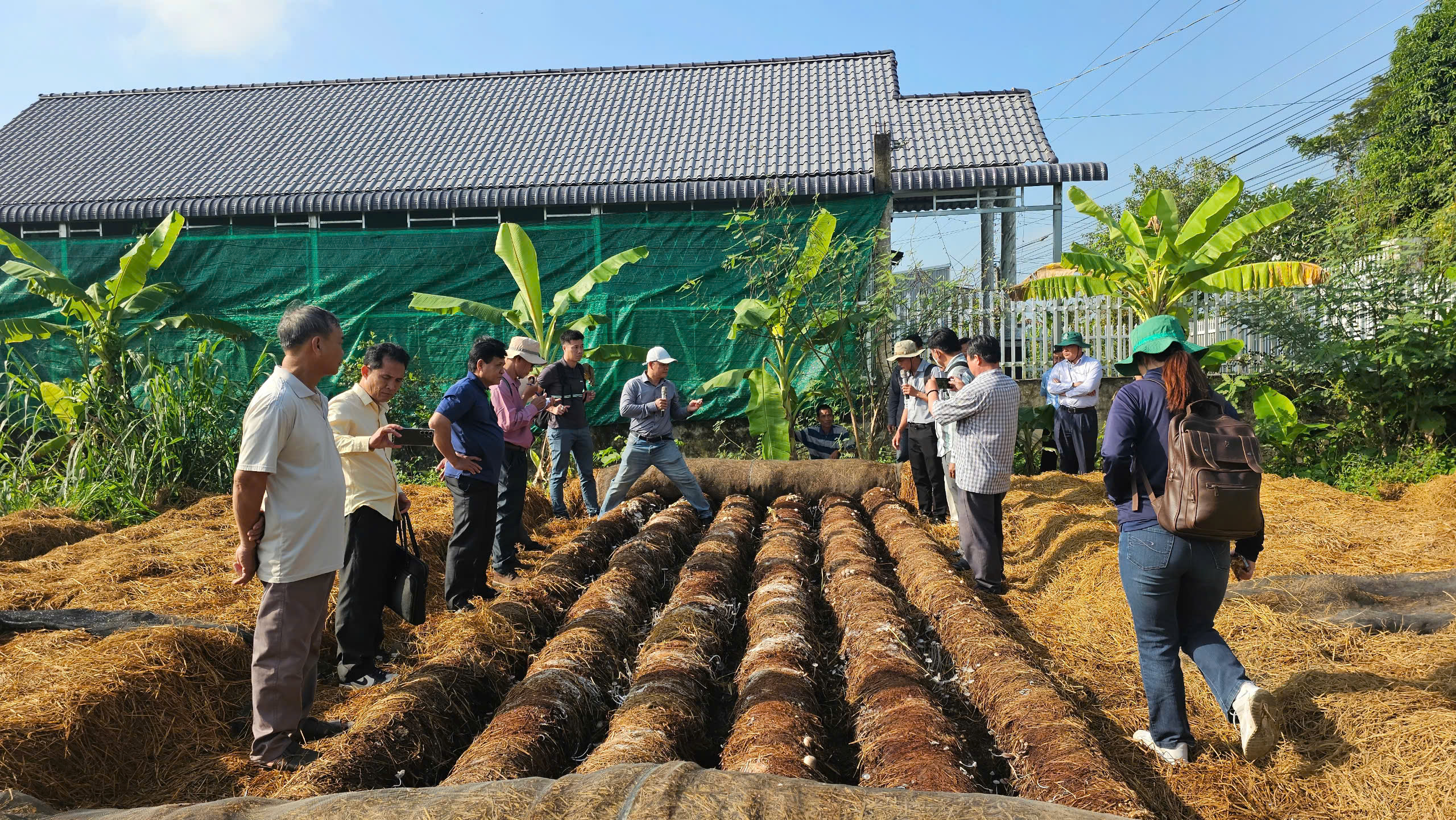
The training was deliberately hands-on. On the first morning, participants waded into outdoor mushroom beds and walked through indoor growing houses, guided by Professor Dr. Le Vinh Thuc of Can Tho University’s College of Agriculture. They harvested straw mushrooms, learned to select raw rice straw, prepare growing sites, and build straw stacks. In the afternoon, they practiced spawning techniques – both outdoor row beds and indoor stacked systems – and even competed in a friendly mushroom-bedding contest.
“We don’t just talk about theory,” said Dr. Ngo Duc The, IRRI Vietnam’s project manager, who addressed the group on rice straw management technologies and circular economy scaling models.
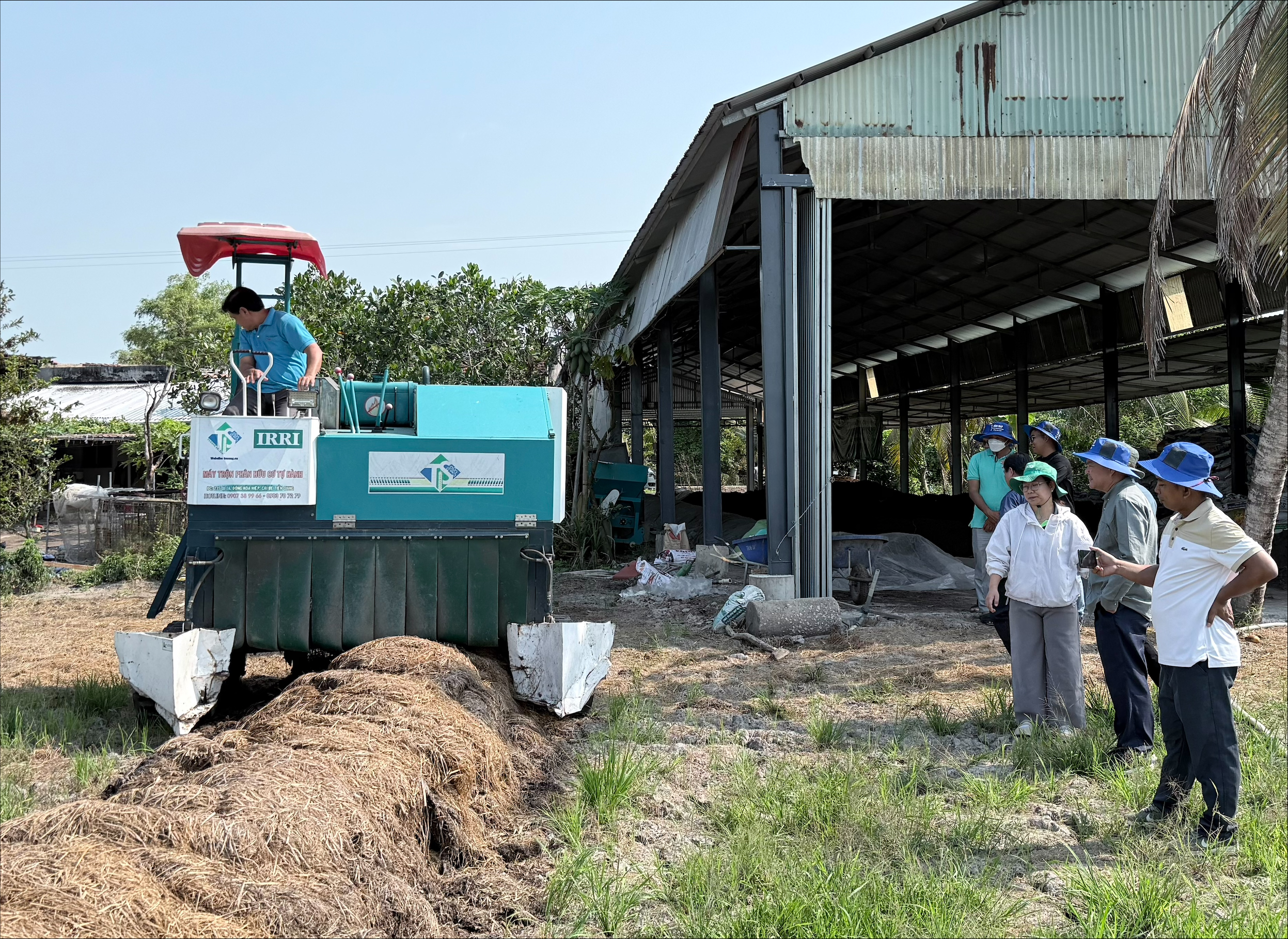
The second day added a mechanization demonstration, led by IRRI scientist’s Tran Thi Cam Nhung, showing how straw can be processed into organic fertilizer using small-scale machinery – another potential income stream for cooperatives.
Cambodia’s Straw Challenge: A Shared Mekong Problem
For the Cambodian delegates, the visit was more than a technical field trip. Across the Mekong Delta and the Cambodian floodplains, rice straw burning remains a major source of air pollution and a wasted resource. While Vietnam has made significant strides in recent years – embedding straw management into its national program for one million hectares of high-quality, low-emission rice – Cambodia is still in the early stages of developing a circular straw economy.
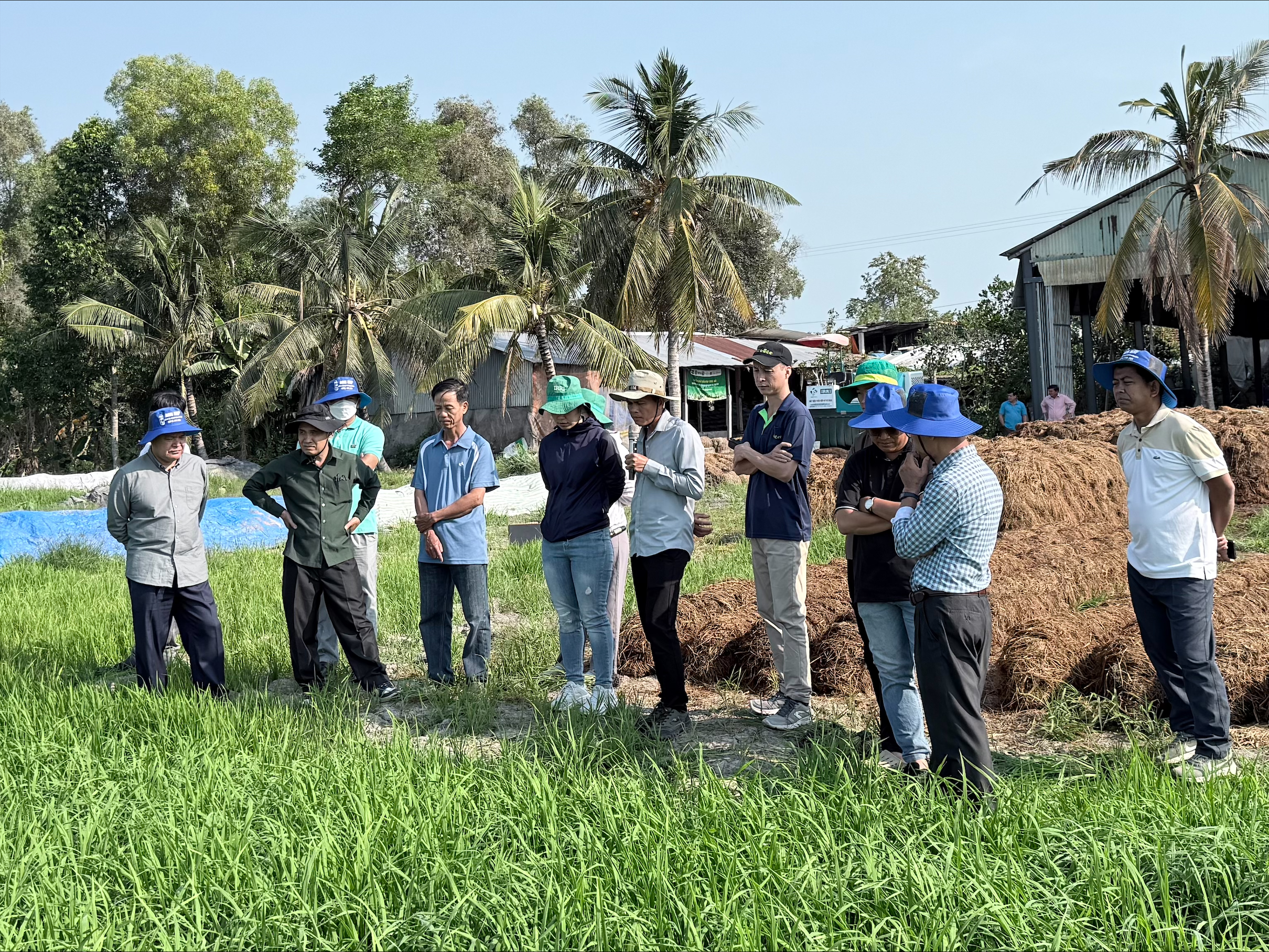
During a sharing session on the second morning, a Cambodian representative presented an overview of straw mushroom cultivation in their home country, including current practices and challenges. The frank exchange that followed, involving Vietnamese cooperative directors and provincial agricultural officials, focused on practical barriers: inconsistent straw supply, lack of quality spawn, and the need for cooperative-based business models that can aggregate smallholder output. “We have the same rice, the same straw, the same climate,” one Cambodian participant noted during the discussion. “If it works here, it can work there.”
Cross-Border Cooperation: More Than Just a Training
The event was organized with support from IRRI Vietnam, which has been facilitating technical exchanges across the Mekong sub-region. Speaking at the closing ceremony, Dr. Ngô Đức Thể emphasized that the training was designed not as a one-off event but as part of a broader effort to build a regional knowledge network on rice straw-based circular agriculture. Representatives from the Can Tho Sub-Department of Crop Production and Plant Protection also reaffirmed Vietnam’s commitment to sharing experience under the national low-emission rice cultivation program, which explicitly encourages cross-border collaboration within ASEAN frameworks.