


 Bahasa Indonesia
  Tiếng Việt
  ភាសាខ្មែរ
 .png) Filipino
Filipino .png) ພາສາລາວ
ພາສາລາວ 
CABIN Project Promotes Precision Agriculture: Reducing Costs, Increasing Income, and Cutting Emissions for Vietnam’s Rice Sector
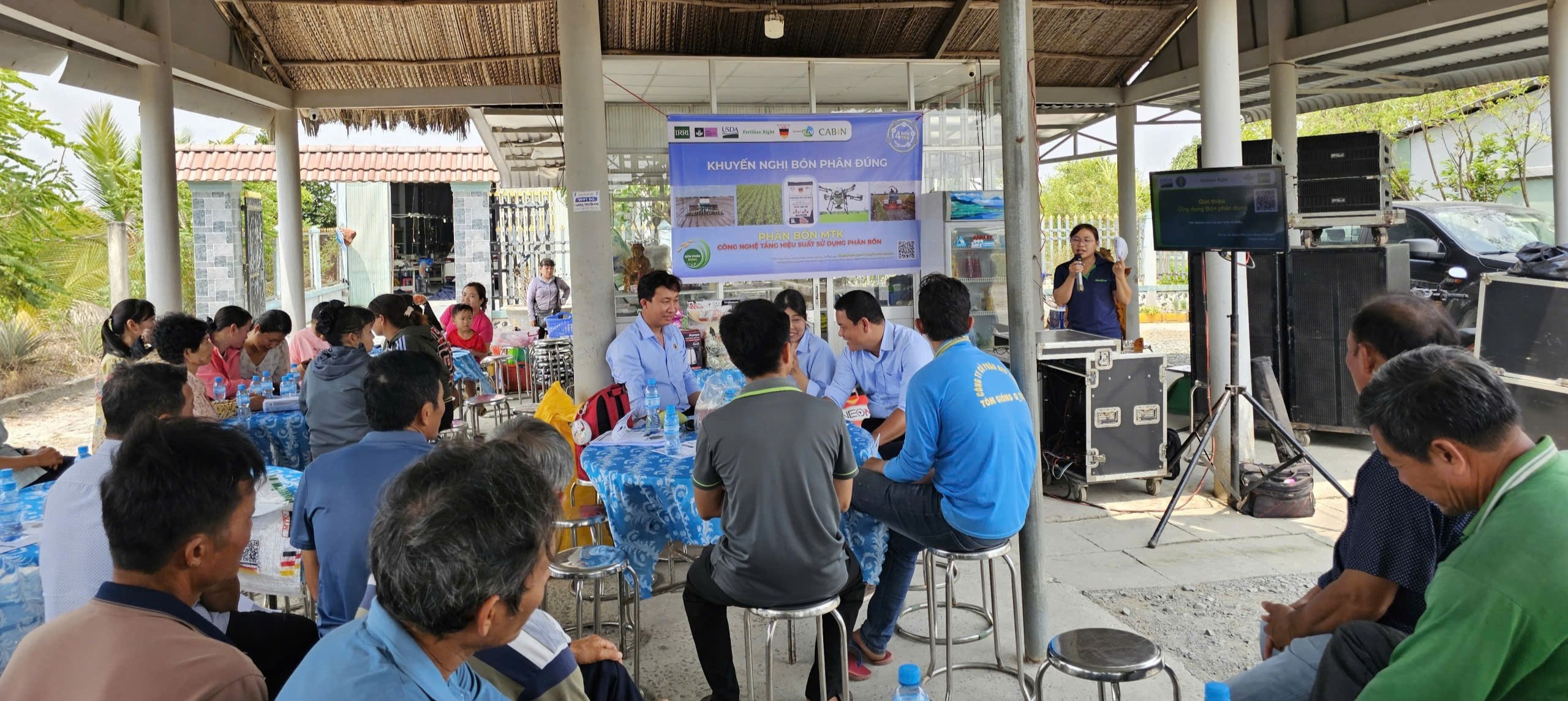
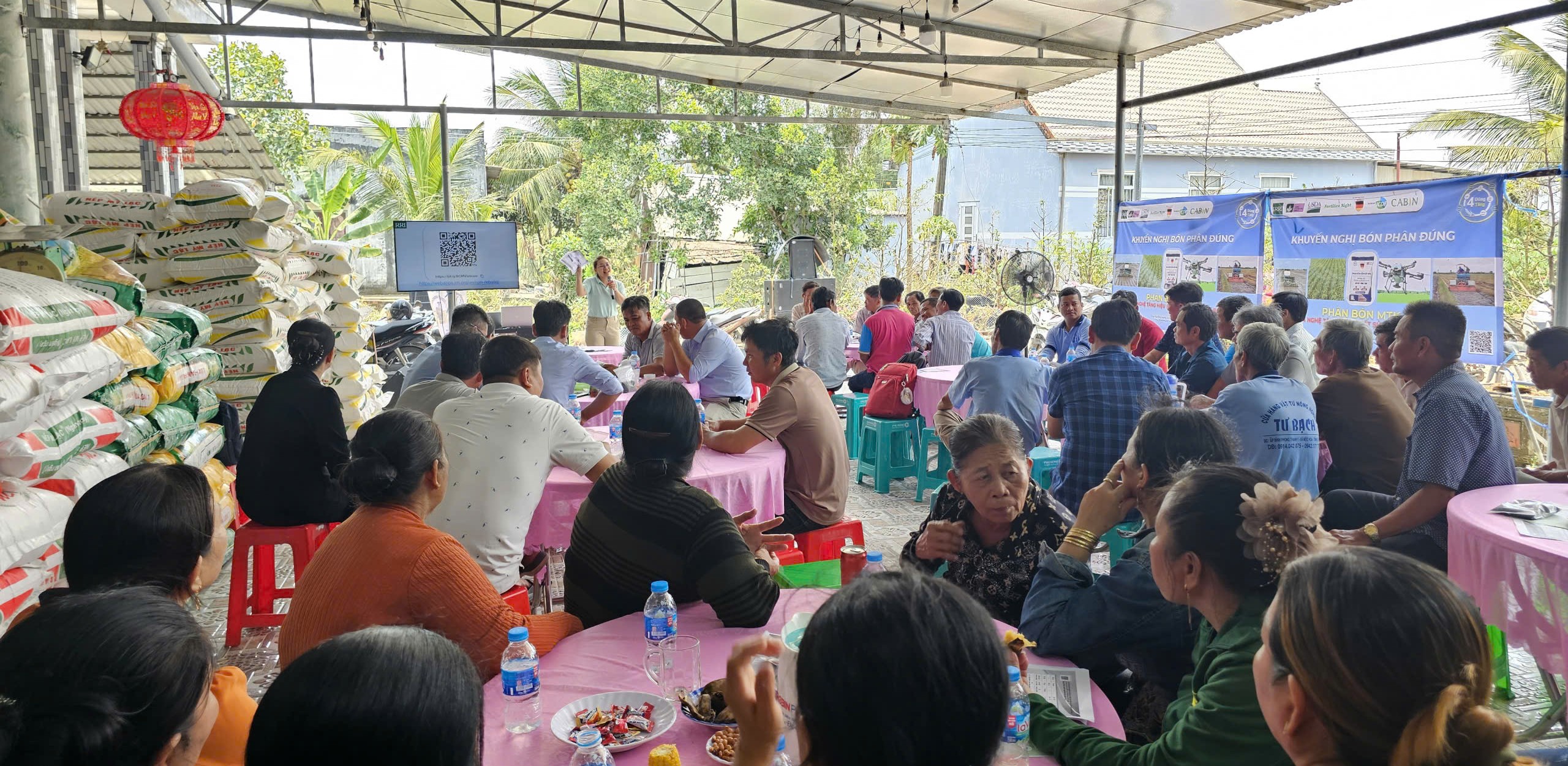
CAN THO CITY, Vietnam – The “Rice Crop Manager” digital app, combined with precision seeding machinery and drones, helps Mekong Delta farmers cut fertilizer use by over 30%, boost yields by 5%, and pave the way for sustainable rice production amid rising input prices. Despite significant advances in rice cultivation techniques, Vietnamese farmers still use high amounts of seeds, fertilizers, and plant protection chemicals, leading to modest production efficiency and mounting environmental pressure. In response, IRRI developed a precision farming solutions integrating smart nutrient management. The core of this approach is the digital application (Rice Crop Manager) combined with technologies such as precision mechanized seeding, fertilizer deep placement, and optimization of nutrient use from rice straw. To ensure farmers can effectively use the digital tool, the CABIN project also supports to provide a series of hands-on trainings on how to operate the Rice Crop Manager app in April 2026. These training sessions guide farmers through inputting local data, interpreting nutrient recommendations, and adjusting fertilization schedules based on real-time field conditions. By bridging the gap between technology and practice, the project empowers farmers to make data-driven decisions with confidence.
According to experts, the application of digital and precision technologies remains limited in Vietnam. Lodging and post-harvest losses are still common, resulting in low product quality and slow improvement in farmers’ incomes. In this context, the transition to high-quality, low-emission rice farming models under the national “1 Million Hectares of High-Quality Rice” initiative has become urgently necessary. Precision agriculture solutions, as recommended by the CABIN project, are seen as a strategic way forward. They help solve three major problems simultaneously: reducing production costs (especially critical amid surging fertilizer prices), increasing farmers’ incomes, and cutting greenhouse gas emissions.
Core Technology and the “4 Rights” Principle
The technical package recommends farmers follow the “4 Rights” principle in fertilization (right type, right rate, right time, right place), combined with region-specific nutrient balancing. Key technologies include:
-
Precision seeding combined with fertilizer deep placement (mDSR).
-
Use of drones for seeding and fertilizing.
-
Enhanced circular nutrient management in rotation models such as rice–potato and rice–sweet potato.
Impressive Results in the Mekong Delta
From practical implementation in cooperatives across the Mekong Delta during the 2024–2026 period, the CABIN project’s solutions have demonstrated clear effectiveness:
-
Seed reduction: 50–60 kg/ha
-
Fertilizer reduction: Over 30%
-
Plant protection chemicals reduction: 20%
-
Yield increase: Approximately 5%
-
Greenhouse gas emissions: Significantly cut
These figures highlight the immense potential of precision agriculture to restructure rice production toward a modern, efficient, and sustainable direction, while contributing to Vietnam’s emission reduction targets for the rice sector.
