


 Bahasa Indonesia
 Tiếng Việt
 ភាសាខ្មែរ
.png) Filipino
.png) ພາສາລາວ

CABIN Contributes to New Study on Rice Straw Management in the Philippines
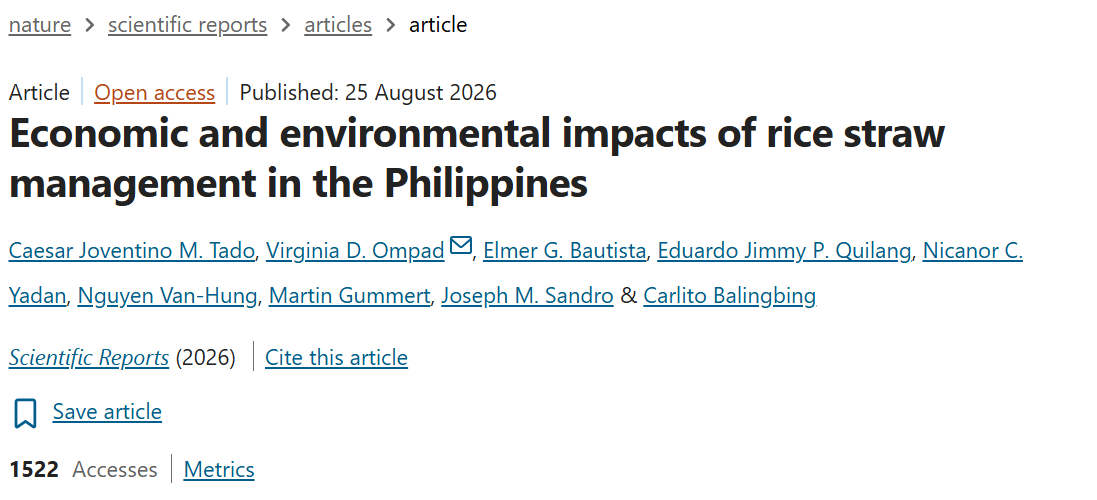
The CABIN project has contributed technical knowledge on sustainable rice straw management to a new study on the economic and environmental impacts of rice straw management in the Philippines.
Rice straw is bulky and hard to handle during land preparation, so many farmers still burn it in the field, releasing pollutants that harm both the environment and human health. Finding better alternatives is essential for sustainable, climate-smart rice production.
Based on a farmer survey across six major rice-producing provinces in the Philippines, the study estimated an average straw yield of 2.5 tonnes per hectare, or about 18 million tonnes nationwide. Practices varied by province, and many farmers use more than one approach: Soil incorporation: 67% (most common); Open-field burning: 25% (lowest in Ilocos Norte, highest in Bukidnon); Livestock feed: 15%; Composting, mulching, and mushroom production: about 10%
The findings show a clear shift away from burning, likely driven by farmers’ growing awareness of health and environmental risks and the rising value of straw for food and feed. This shift has increased net energy gains, reduced air pollution, and added economic value to rice straw.
Read the full paper: https://www.nature.com/articles/s41598-026-64179-3
