

 Bahasa Indonesia
  Tiếng Việt
  ភាសាខ្មែរ
 .png) Filipino
Filipino .png) ພາສາລາວ
ພາສາລາວ 
Turning Rice Straw into Opportunity: CABIN Project Promotes Circular Agriculture Through Innovative Composting Technology
Ninh Binh, Vietnam | 8 July 2026
Rice straw is often viewed as a challenging agricultural byproduct, frequently burned or discarded after harvest. However, a field demonstration supported by the CABIN Project is helping to change that narrative by showing how rice straw can become a valuable resource for sustainable agriculture.
On 8 July 2026, IRRI and partners organized a demonstration of mechanized rice straw composting integrated with microbial biotechnology in Ninh Binh Province, attracting 91 participants, including farmers, cooperatives, local authorities, researchers, and private-sector representatives.
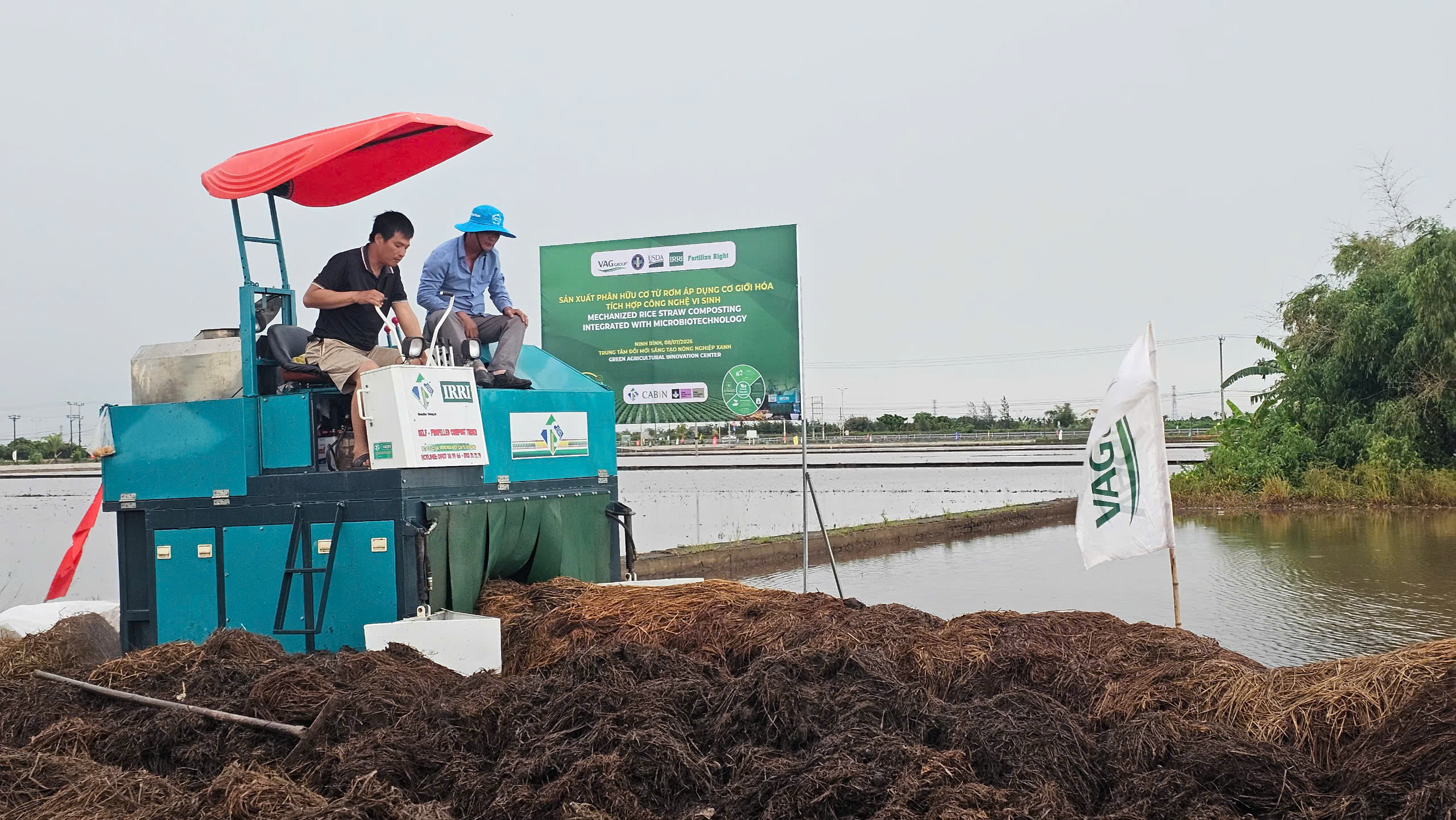
The demonstration showcased a public-private partnership between IRRI and the Vietnam Green Agriculture Investment and Development Group (VAG Group) aimed at scaling circular and low-emission agricultural solutions. Combining mechanized straw processing with microbial inoculants, the technology accelerates decomposition and transforms post-harvest residue into nutrient-rich organic fertilizer.
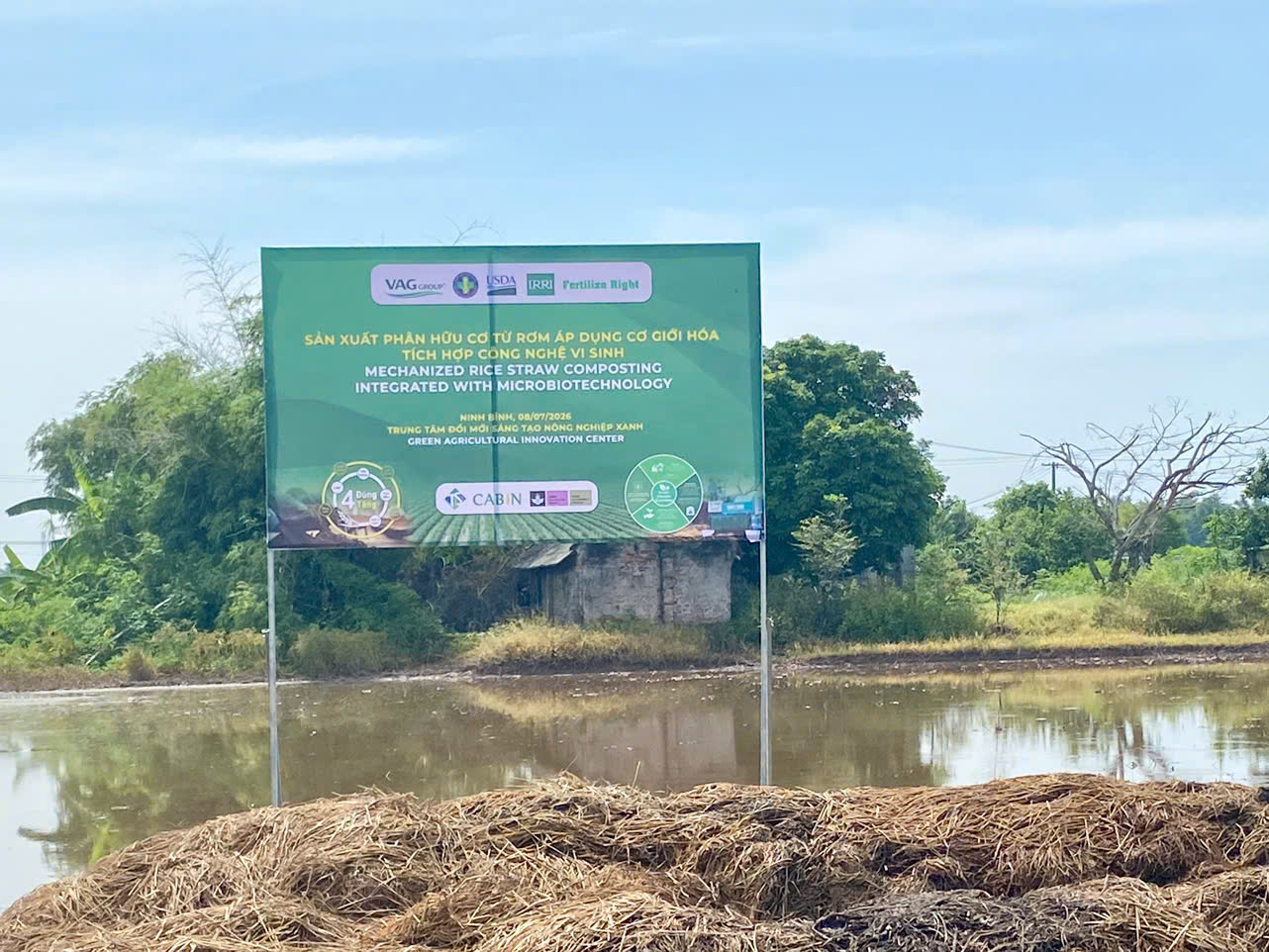
With a processing capacity of up to 300 cubic meters of rice straw per hour, the technology offers significant opportunities for commercialization and wider adoption through agricultural service providers and cooperatives. Beyond reducing emissions from open-field straw burning, the resulting organic fertilizer improves soil organic matter, enhances nutrient retention, and supports long-term soil health.
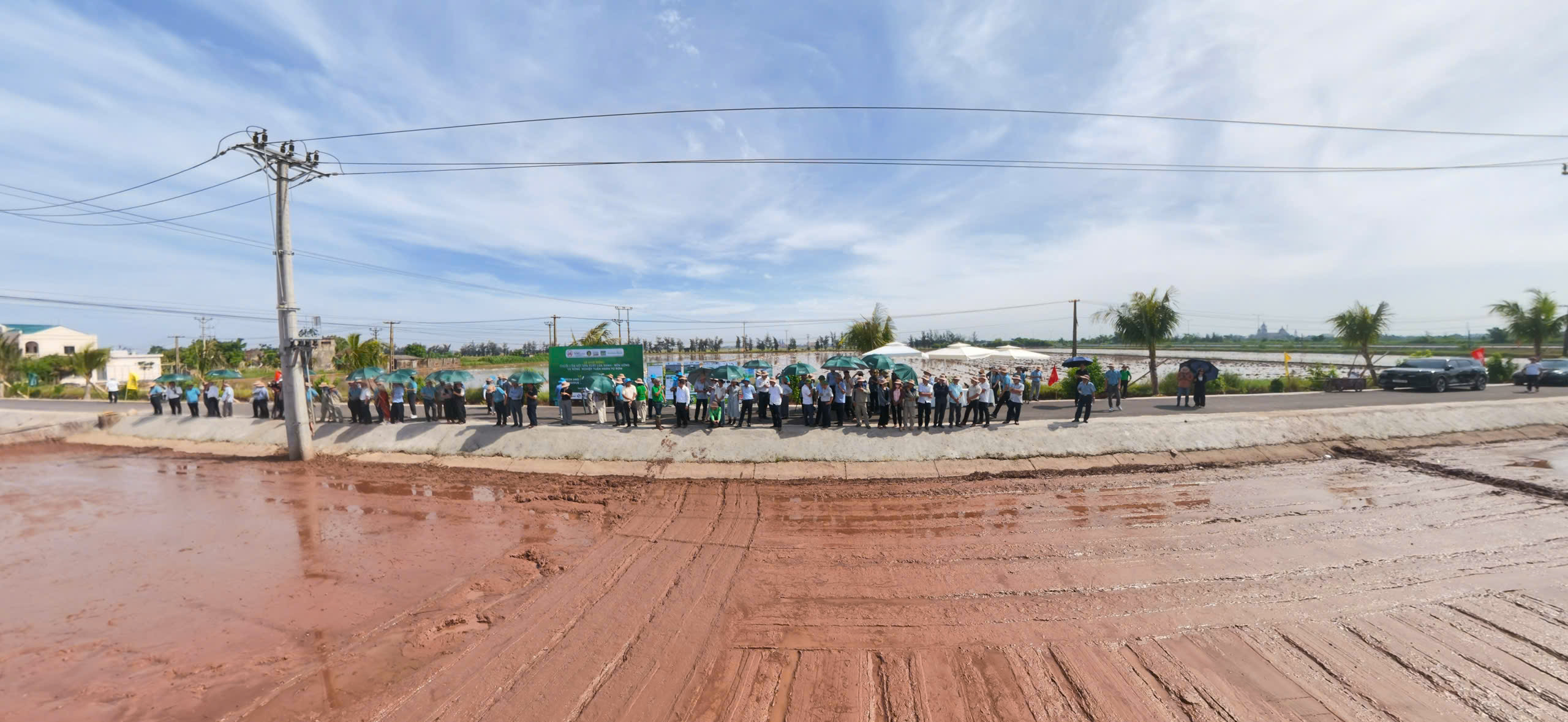
The initiative demonstrates how public-private partnerships can bridge research innovation and commercial deployment, helping farmers adopt practical solutions that contribute to climate resilience, circular agriculture, and low-emission rice production systems.
