


 Bahasa Indonesia
  Tiếng Việt
  ភាសាខ្មែរ
 .png) Filipino
Filipino .png) ພາສາລາວ
ພາສາລາວ 
Regional workshop in Hanoi turns spotlight on rice straw’s potential to cut emissions and boost farmer incomes
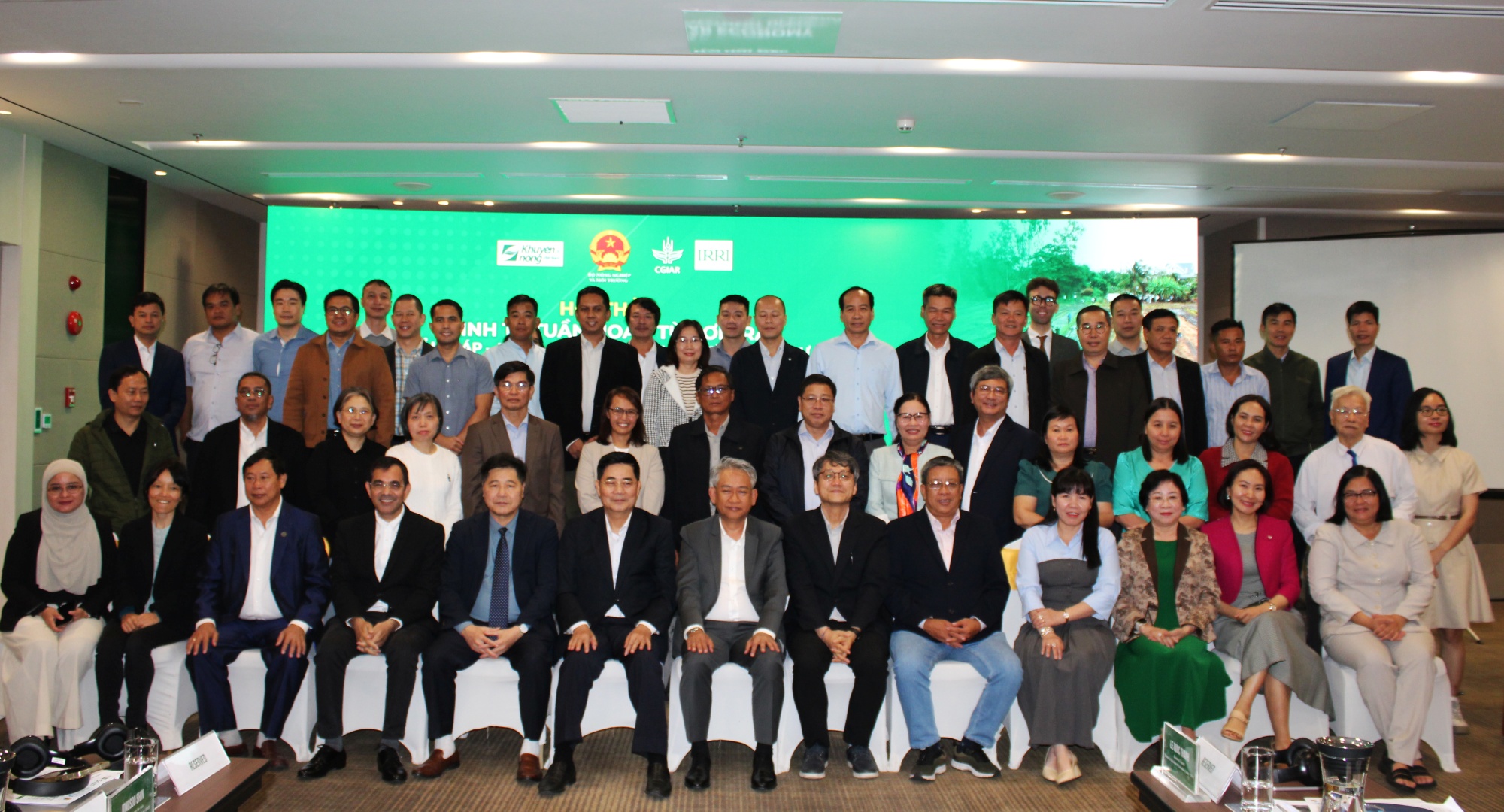
HANOI – 20 January 2026 – More than 50 delegates from Vietnam, Cambodia, Thailand, Indonesia, and the Philippines gathered in Hanoi for a regional workshop exploring how rice straw long treated as agricultural waste can become a cornerstone of the circular economy across Southeast Asia.
The Rice Straw-Based Circular Economy Workshop, organized with contributions from the CABIN project, brought together policymakers, researchers, cooperative leaders, private enterprises, and financial institutions. The event aimed to move beyond scientific presentations and function as a working forum to align research evidence with policy frameworks, private sector engagement, and concrete investment pathways for scaling up straw management solutions. The meeting comes at a moment of rapid policy evolution across the region.
In Vietnam, rice straw management has been formally integrated into the national program for the Sustainable Development of One Million Hectares of High-Quality and Low-Emission Rice Cultivation in the Mekong Delta — a key component of the country’s commitment to green growth and net-zero emissions by 2050. Cambodia, meanwhile, is increasingly embedding straw management interventions within its climate change mitigation strategies and agricultural mechanization reforms. At the regional level, ASEAN and Greater Mekong cooperation frameworks are prioritizing sustainable agrifood transformation, circular economy development, and cross-border knowledge exchange.
From waste to revenue
Workshop participants heard evidence that straw-based business models are not only technically feasible but already delivering tangible economic returns. In Vietnam’s Mekong Delta, Tien Thuan Cooperative recorded an income increase of more than 20 percent — equivalent to approximately US$640 per hectare per year — after integrating straw mushroom cultivation and organic fertilizer production from rice straw. Across the border in Cambodia, cooperatives participating in the project achieved an average profit of US$136 per ton of compost, while also generating stable income from straw mushroom cultivation, a short-cycle activity well-suited to smallholder farmers.
The workshop pursued three core objectives: introducing scalable innovations including validated technologies, cooperative-based business models, and digital coordination tools; strengthening a regional knowledge platform for cross-country learning and multi-stakeholder collaboration; and generating investable concepts to accelerate large-scale implementation, including mechanisms for carbon finance integration, mechanized service provision, and logistics development.
Taiwan’s international experience
A distinctive international perspective came from Dr. Wen-Ling Deng, representing the Taipei Economic and Cultural Office in Hanoi. She told the assembly that Taiwan banned rice straw burning outright in 2002, backed by heavy financial penalties. But prohibition alone, she acknowledged, was never enough. “For the first ten to twenty years, we treated straw as agricultural waste — given away for free,” Dr. Deng explained.
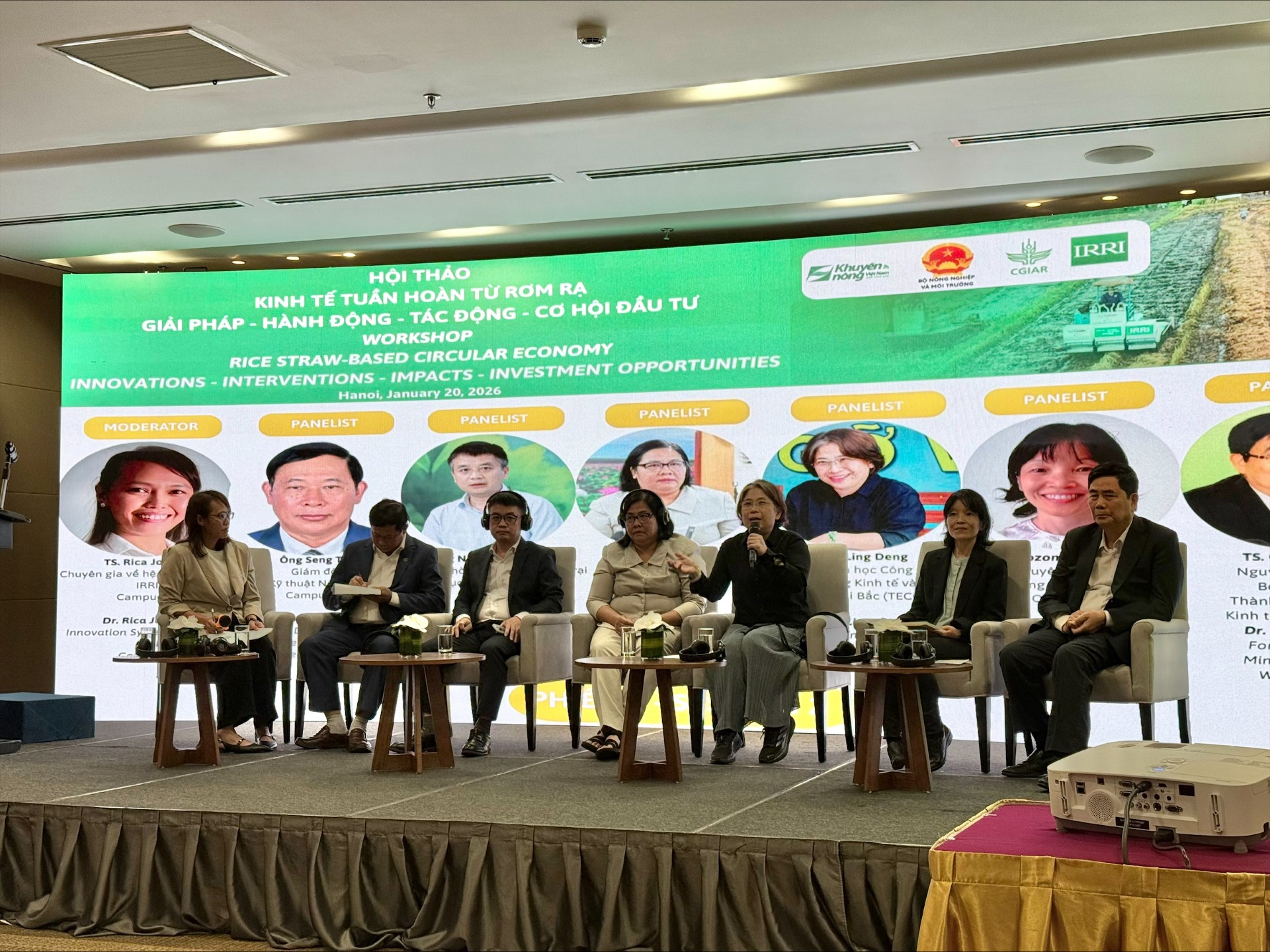
That deliberate strategy, she said, was designed to lower the barrier for private sector investment. Only after a market and infrastructure had matured did Taiwan transition to treating rice straw as a priced commodity. Her remarks underscored a central theme of the workshop: that technological solutions must be paired with patient policy sequencing, market development, and sustained multi-stakeholder collaboration if the region’s ambitious circular economy goals are to move from pilot projects to landscape-scale transformation.
Structured panel discussions and collaborative pitching sessions continued through the day, with participants exploring pathways for carbon finance integration and logistics development as next-step priorities.
