


 Bahasa Indonesia
  Tiếng Việt
  ភាសាខ្មែរ
 .png) Filipino
Filipino .png) ພາສາລາວ
ພາສາລາວ 
Regional learning for sustainable rice straw management
Can Tho City , Vietnam, November 19, 2025 – The annual rice harvest yields not only a vital food source but also millions of tons of rice straw. Across Southeast Asia, managing this agricultural residue sustainably and economically is a shared, pressing challenge. Traditional practices like open-field burning pollute the air, degrade soil health, and contribute to climate change.
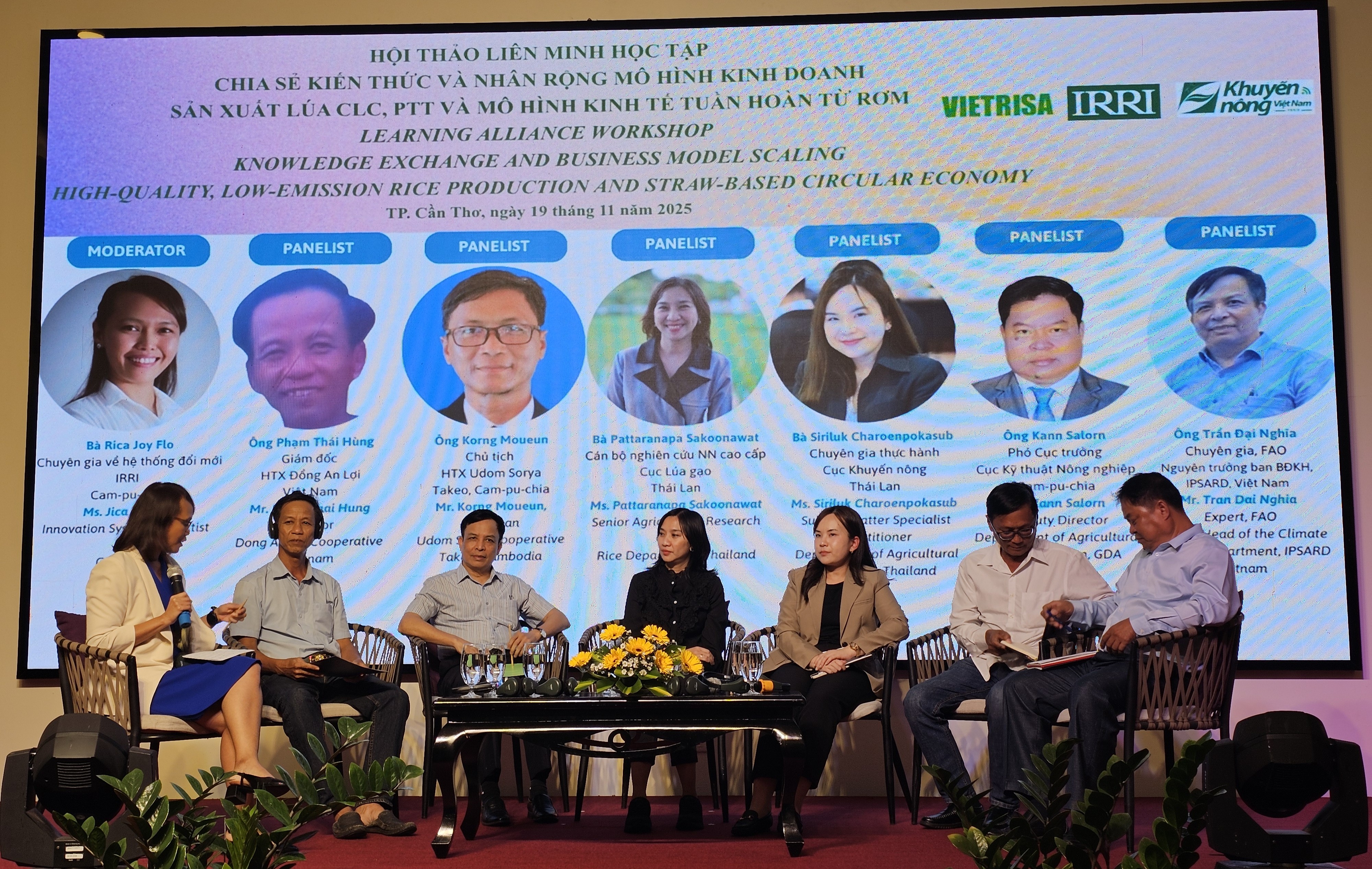
In response to this common need, a regional Learning Alliance on Rice Straw Circular Economy was formed with supports from CABIN project. About 150 delegates from three countries (Vietnam, Cambodia, Laos, Myanmar, and Thailand) – including farmers, cooperatives, extension officers, businesses, and policymakers – have come together to share knowledge, technology, and practical business models. The Alliance acts as a vital “bridge” for regional cooperation, where diverse stakeholders exchange experiences, technology, and profitable business models to transform straw from a waste product into a valuable asset. The Alliance not only scales up technical solutions and shares effective implementation experiences but also builds a sustainable cooperation network in the region.
Proven Solutions, Local Constraints
Technical solutions validated across Vietnam, Cambodia, and Thailand include mechanized straw collection, mushroom cultivation, microbial-enhanced in-field decomposition, and mechanized composting. These technologies have succeeded in real-world settings but must be adapted to local conditions—including crop calendars, straw moisture levels, mechanization availability, and market access. Farmer incentives and awareness emerged as central enablers across all countries. Adoption accelerates when producers clearly perceive economic benefits—whether through new income streams from selling straw, reduced fertilizer costs, improved soil health, or stronger market linkages. The challenge is most acute in Cambodia, where straw remains widely perceived as waste requiring disposal rather than a resource generating value.
The Barrier Nobody Has Solved Alone
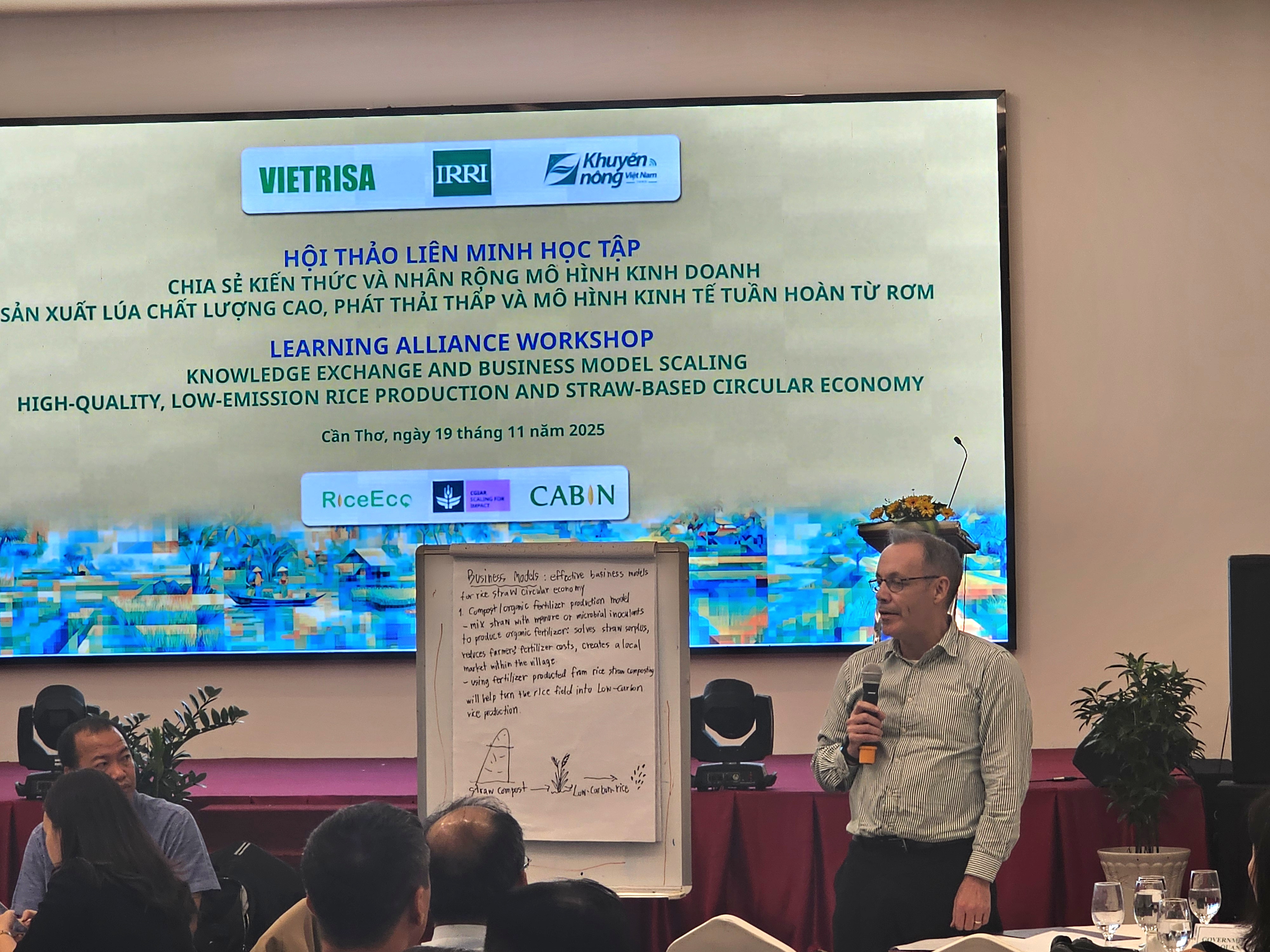
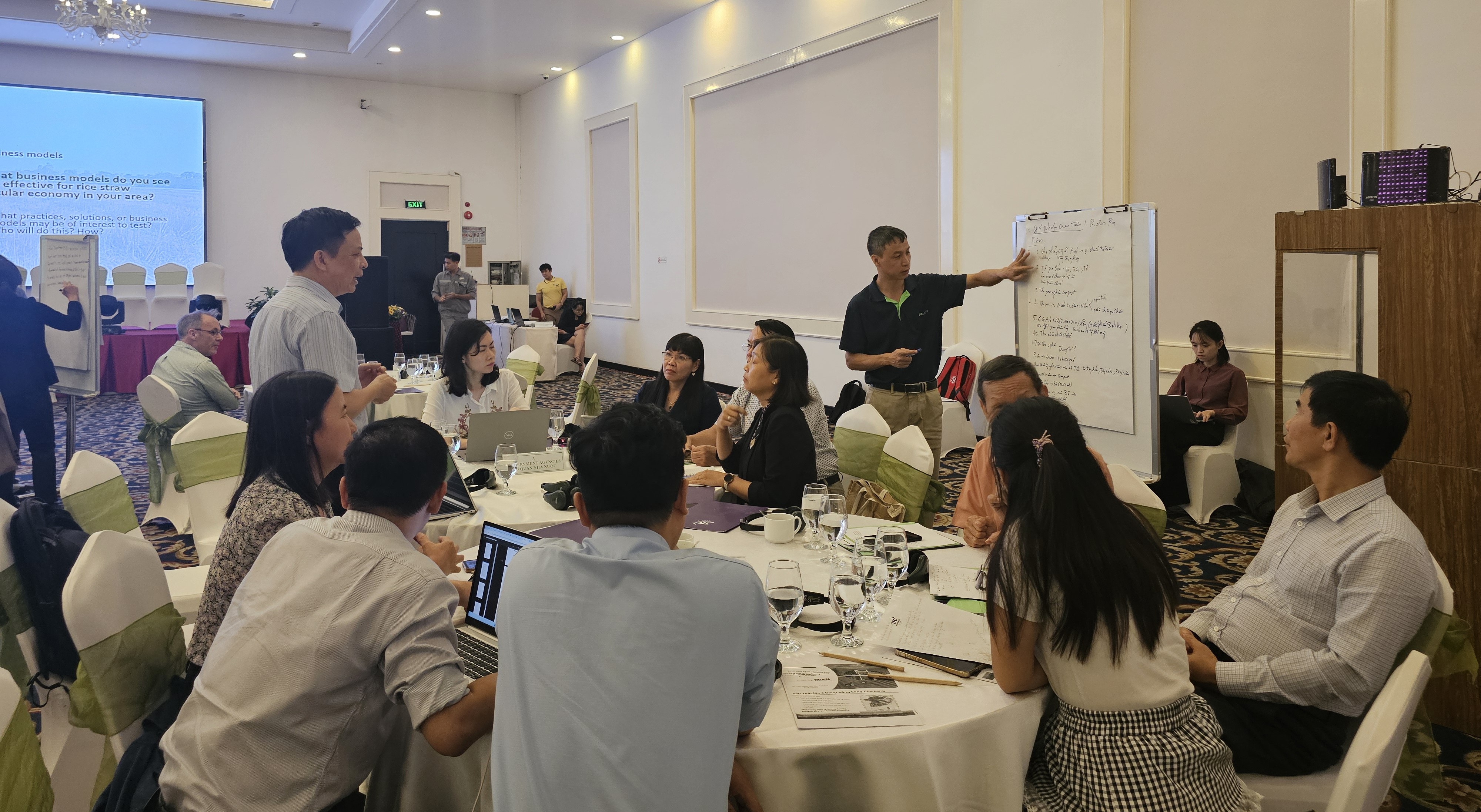
Despite the promise, persistent obstacles transcend national borders. Logistics and cost structures such as machinery investment, narrow harvest windows, and transportation inefficiencies remain major barriers across the Mekong region. Straw’s bulky nature makes collection and transport prohibitively expensive without high-density compaction solutions. Participants identified improved value-chain linkages as essential to reducing costs. The most viable business models, workshop participants found, focus on local circular loops:
- Mechanized composting and local organic fertilizer production
- Mushroom cultivation using rice straw
- Cattle feed and livestock bedding
- Cooperative-led baler service models
- Integrated systems combining straw, mushrooms, compost and crops
These models succeed when embedded within cooperative or community structures that share equipment, risks, and markets. Individual farmer adoption remains far less feasible than collective implementation at village or cooperative levels.
Policy and Finance Perspectives for Scaling Up
National frameworks are providing direction. Vietnam’s One Million Hectares low-carbon rice program and Thailand’s Bio-Circular-Green Economy (BCG) strategy were cited as pivotal policy enablers for scaling sustainable straw practices. However, significant gaps persist across the region in investment incentives, subsidy alignment, and integrating straw management into broader rice value chains. A recurring message from the workshop was that financial investment requires stronger evidence and standardized metrics, particularly for verifying emission reductions. Without robust Monitoring, Reporting, and Verification (MRV) systems specifically designed for rice straw, access to climate finance and carbon markets remains severely limited.
Why Regional Cooperation Matters Most
Perhaps the workshop’s most significant outcome was the reaffirmation of regional cooperation’s value. Despite differing conditions among Vietnam, Cambodia, and Thailand from cropping calendars to mechanization levels to market maturity, participants face remarkably similar challenges and have developed complementary solutions. The Learning Alliance created space for practical exchange on what works, what doesn’t, and how models can be adapted. This highlights the value of a regional platform for continuous knowledge transfer. Countries can now exchange practical models, adapt proven solutions, and build collective momentum toward sustainable, low-emission rice production—something none could achieve alone.
The Path Forward
The workshop concluded that building a thriving straw-based circular economy requires a coordinated systems approach combining policy support, viable business models, scalable technologies, digital innovation, and sustained capacity building. Next steps include developing evidence-based strategies, strengthening market systems, and fostering long-term regional collaboration to enhance climate resilience and agricultural sustainability across the region. For the millions of rice farmers across Southeast Asia, the message is increasingly clear: the smoke rising from their fields represents not just wasted biomass, but lost income, stranded climate opportunity, and a cross-border challenge demanding a collective response. The solutions exist. The question now is whether investment, policy, and regional cooperation will follow at the scale required.
