

 Bahasa Indonesia
  Tiếng Việt
  ភាសាខ្មែរ
 .png) Filipino
Filipino .png) ພາສາລາວ
ພາສາລາວ 
From Theory to Field: Stakeholders Witness Rice Circular Economy in Action
CAN THO CITY, Vietnam – Field visits and demonstrations on the 1-million-hectare high-quality, low-emission rice farm and rice straw-based circular economy models were conducted on the morning of October 10, 2024, in Can Tho City. This immersive field visit showcased the real-world implementation of the 1-Million-Hectare High-Quality, Low-Emission Rice Program, offering a firsthand look at how circular economy models are transforming Southeast Asian agriculture.
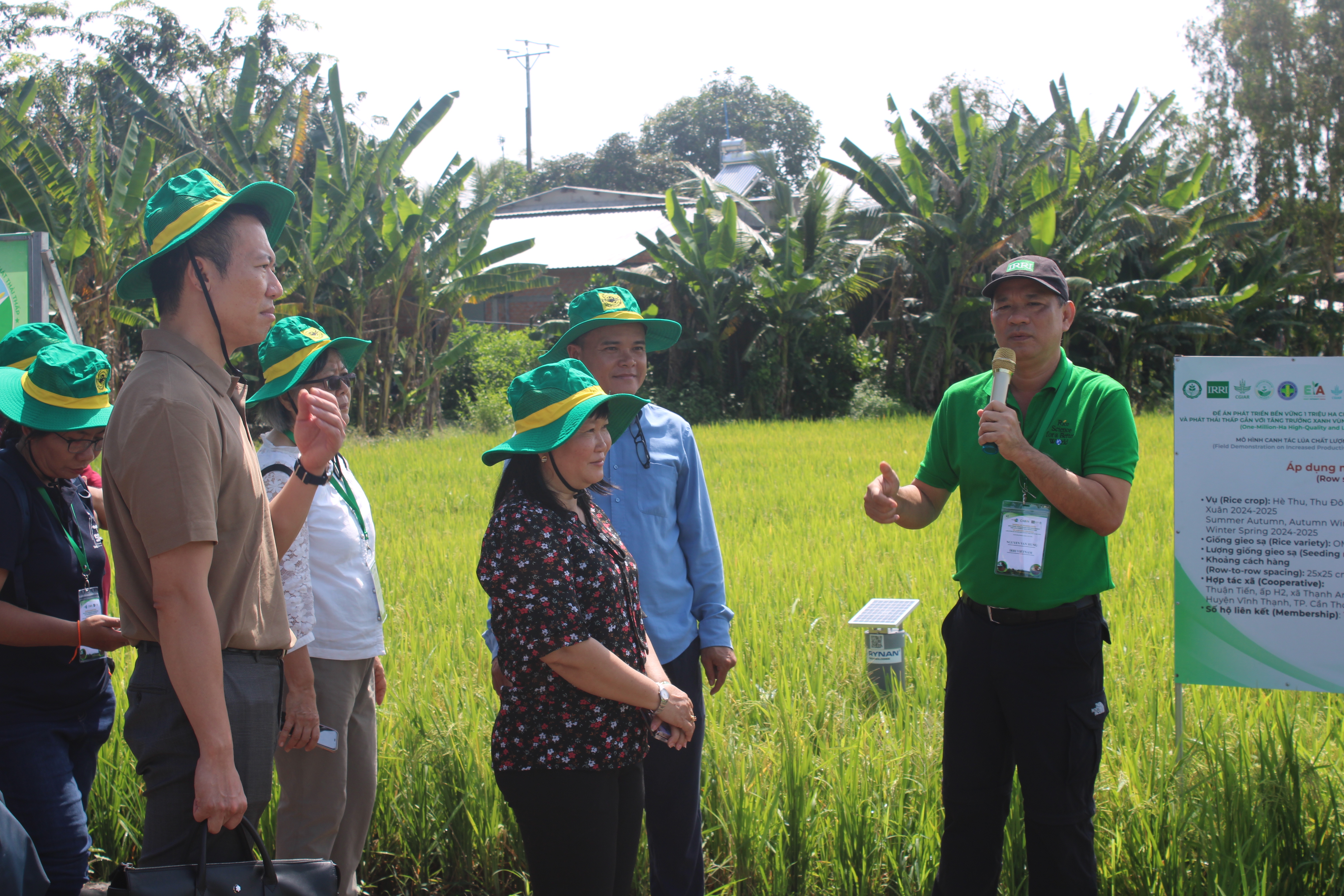
Million-hectare high-quality, low-emission rice field
In a landmark collaboration between Vietnam Ministry of Agriculture and Rural Development, International Rice Research Institute, and the Can Tho Department of Agriculture, a 50-hectare pilot field was launched for the 2024 Summer-Autumn season. The site serves as a live demonstration of high-efficiency cultivation, featuring optimized seeding rates of just 60kg/ha through advanced mechanized row-seeding. By integrating deep fertilizer placement directly with the seeding process, the cooperative has reduced fertilizer applications from four down to just two per crop, allowing for a 20% reduction in nitrogen use while simultaneously minimizing irrigation needs and disease risks.
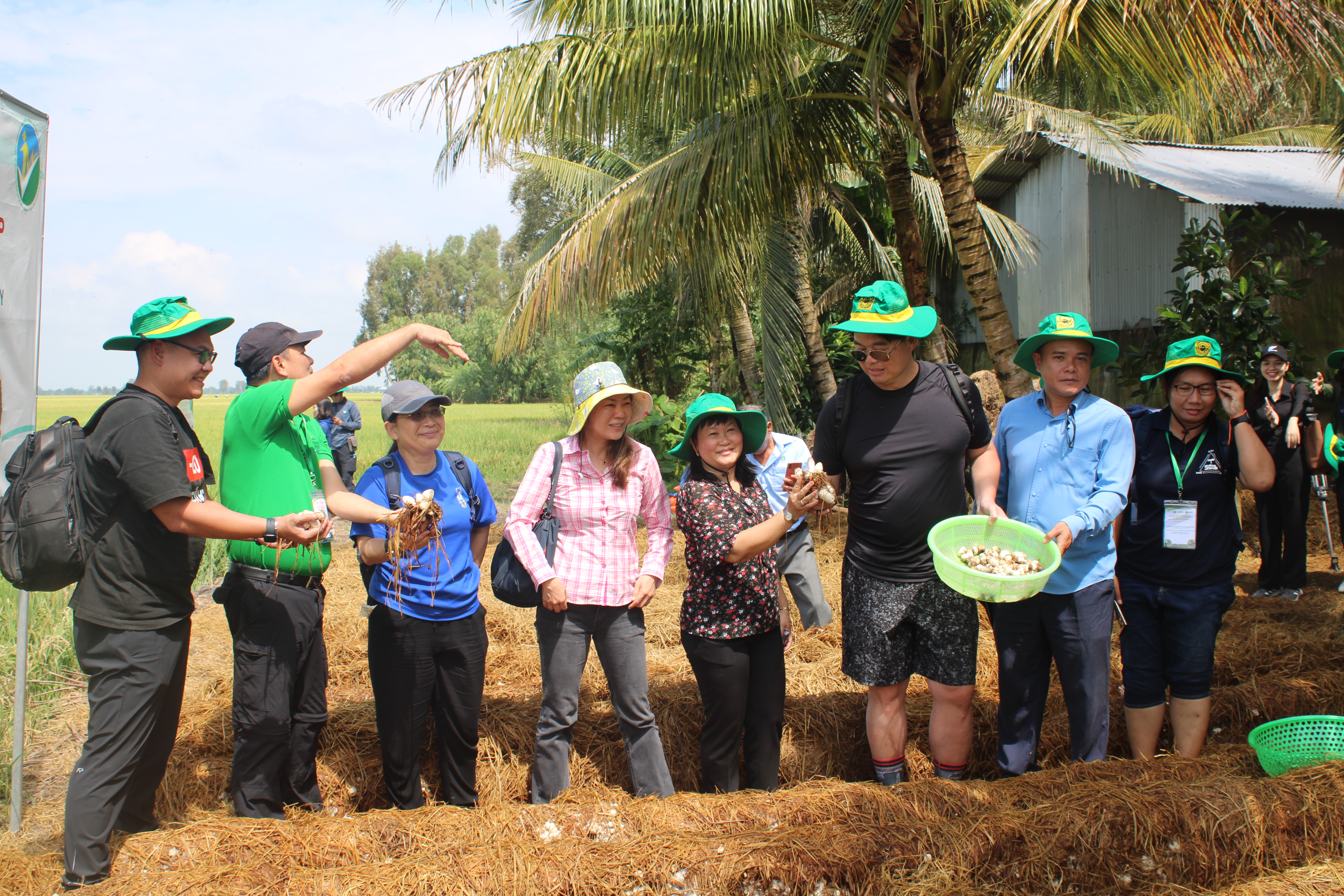
Mushroom Production Model Using Rice Straw
The visit also highlighted the high-value potential of Mushroom Production using rice straw. Participants explored the science of substrate preparation, learning how to evaluate compost readiness through color, smell, and moisture content. This demonstration culminated in a hands-on harvesting experience, showing how nutrient-dense straw substrates support high-quality yields and provide farmers with an immediate, profitable alternative to straw burning.
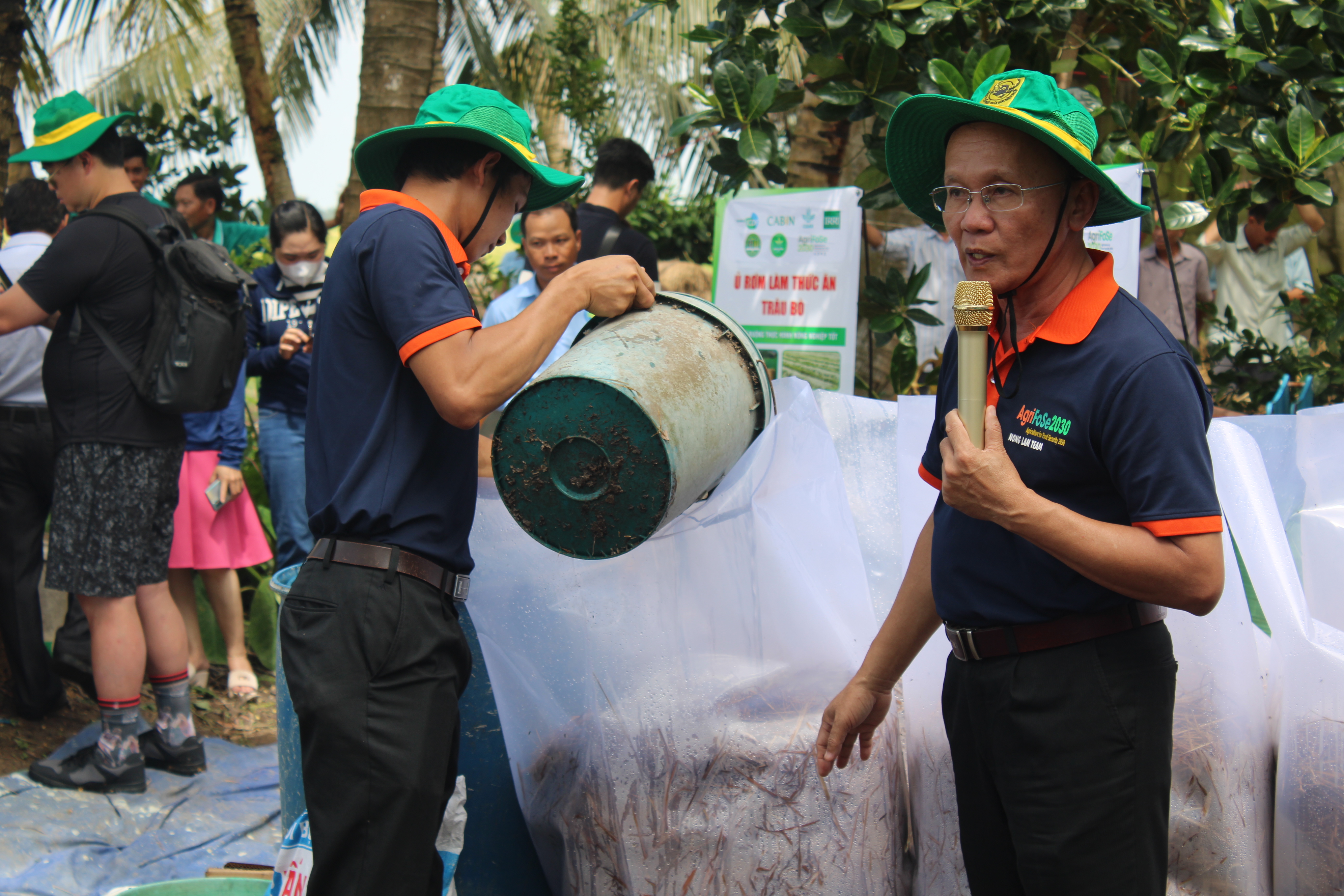
Animal Feed and Bio-Bedding
Participants observed how treated rice straw can be repurposed to improve animal comfort and reduce bedding costs, as it absorbs waste and decomposes into a nutrient-rich layer over time. Furthermore, by improving the digestibility of the straw through specialized treatment, it becomes a nutritious supplemental feed source, effectively closing the loop between crop production and animal husbandry.
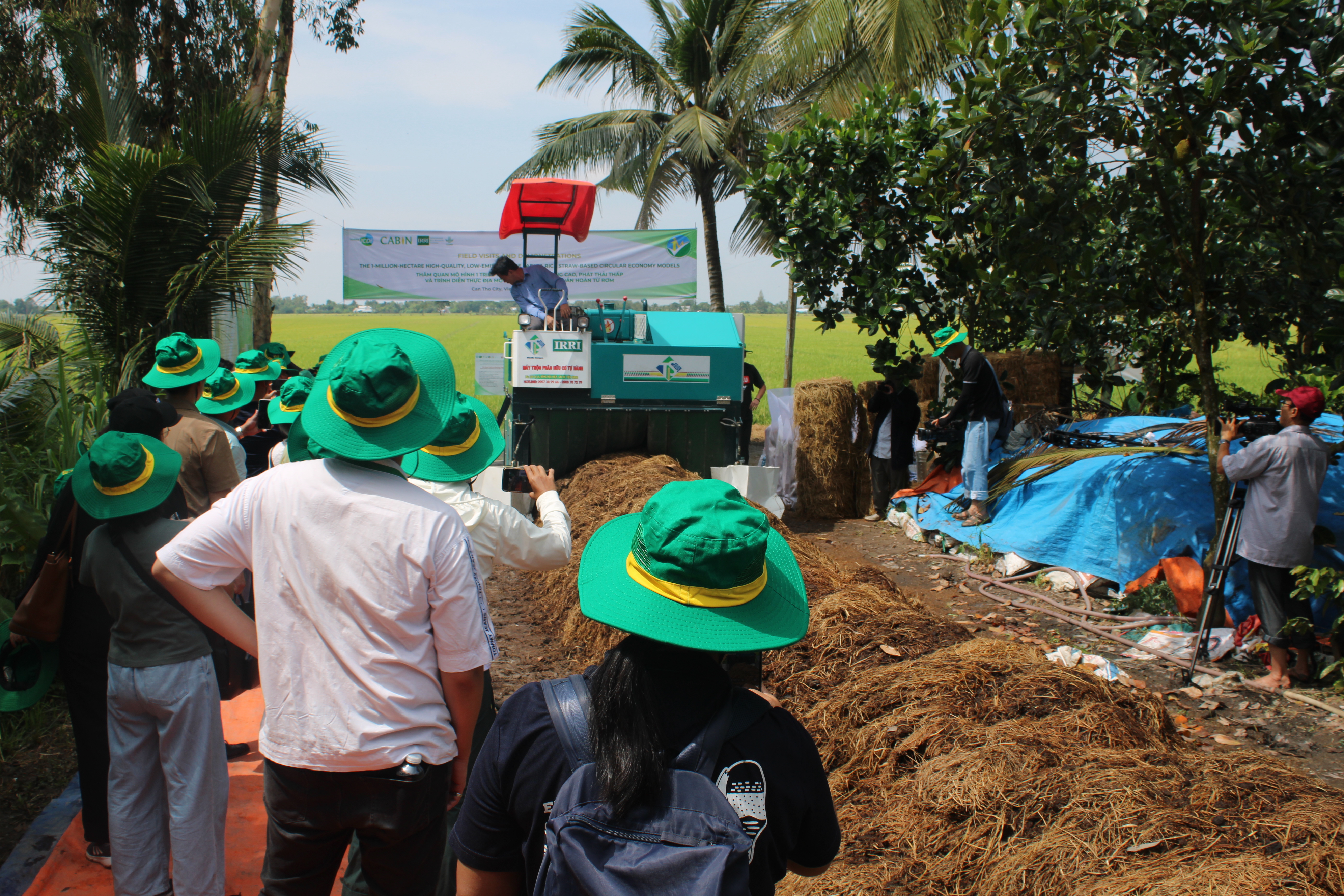
Mechanized composting
During the field visit, farmers saw how modern mechanized compost turners make recycling rice straw fast and easy. This practical demonstration proved that the technologies discussed throughout the workshop are not only viable but are already creating a blueprint for high-quality, low-emission agriculture across the region.